
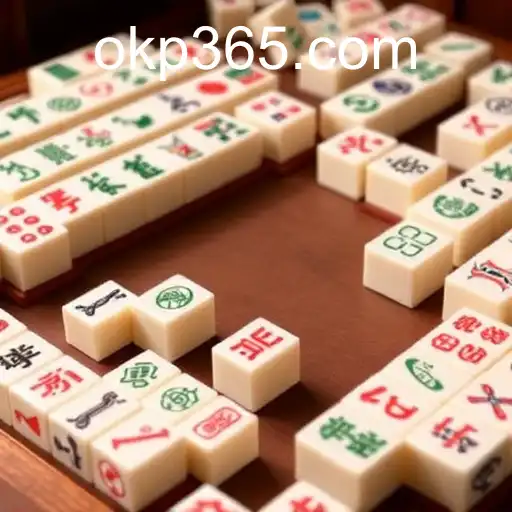
OKP | Exploring Mahjong: A Rich Cultural Tradition and Its Modern Digital Evolution
Delve into the world of Mahjong, a traditional Chinese game that has captivated players globally. Discover its origins, cultural significance, various game strategies, and how online platforms (OKPs) have transformed its reach and play. de OKP
Understanding Mahjong: A Deep Dive into the Fascinating Game
The Origin and Evolution of Mahjong
Originating in China over a century ago, Mahjong is a captivating game that marries strategy, skill, and chance. Believed to have been developed during the Qing Dynasty, this game has grown beyond its borders to become a global pastime enjoyed by millions. Mahjong traditionally involves four players, though variations in different regions have altered some of its original rules and structures.ZWW
The Basics of Mahjong
At its core, Mahjong is a game of tiles, with the typical set containing 144 tiles based on Chinese characters and symbols. The game begins with players building a wall of tiles, which they take turns to draw and discard, much like a card game. The primary objective is to form a winning hand as soon as possible. A winning hand usually consists of four melds (or sets) and a pair. Players strive to use both skill and a bit of luck to achieve this configuration before their opponents do.ZebraPG
Decoding OKP in Mahjong
In the grand tapestry of Mahjong, the term OKP has been gaining traction. Though primarily utilized within certain gaming communities, OKP refers to online platforms where players can engage in Mahjong games. These platforms have revolutionized the way players from all corners of the globe connect and compete, removing geographical barriers and creating a vibrant online community.ZWW
The Role of Technology in Modern Mahjong
With the rise of the internet, the landscape of Mahjong has radically transformed. Online Mahjong platforms, or OKPs, have become the centerpiece of this transformation, offering players an opportunity to play anytime and anywhere. These platforms not only provide traditional Mahjong games but also feature diverse variants that cater to different player preferences.
The Cultural Significance of Mahjong
Mahjong is more than just a game; it is a cultural artifact that reflects the history and social dynamics of its time. In Chinese culture, Mahjong is deeply woven into the fabric of community life, often seen at social gatherings and celebrations. Through generations, Mahjong has remained a cherished pastime, known for bringing people together and fostering a sense of solidarity.
Strategies for Mastering Mahjong
Winning Mahjong requires a blend of strategic thinking, adaptability, and observational skills. Key strategies include careful tile management and keen observation of opponents' moves to anticipate their strategies. Master players often pay close attention to discard patterns, which can reveal valuable insights into opponents' hands and intentions.
The Rise of Competitive Mahjong
What once was a leisure activity confined to family gatherings has now become a competitive sport with dedicated tournaments and championships. Competitive Mahjong demands a high level of expertise, where players showcase their strategic acumen and mental prowess. The World Mahjong Organization, established to promote the game globally, has been instrumental in elevating Mahjong to competitive status.
Mahjong Variants Across the Globe
Over time, Mahjong has branched into numerous variants, each with its own unique twist. One popular variant is the Japanese Mahjong, known as Riichi Mahjong, which incorporates elements such as calling Mahjong without revealing the hand, adding layers of strategy to the game. In contrast, American Mahjong incorporates the use of jokers and gives players cards with specific winning hand combinations to follow. Each variant offers a fresh perspective on traditional Mahjong, enriching the game's diversity.ZebraPG
The Global Impact of Online Mahjong Platforms (OKPs)
The advent of OKPs has not only broadened access to the game but also fostered a diverse and inclusive global community. These platforms offer educational resources and guides to assist players in learning and mastering Mahjong. Moreover, they enable participation in international tournaments and events, further bridging cultural and geographical gaps.ZX39
The Future of Mahjong
As technology evolves, the future of Mahjong looks promising. Augmented and virtual reality technologies are likely to enhance OKP experiences, offering more immersive and interactive environments for players. This evolution will continue to nurture the global Mahjong community, ensuring that the game carries forward its rich heritage while appealing to a new generation of players.
